
About
A house
of earth
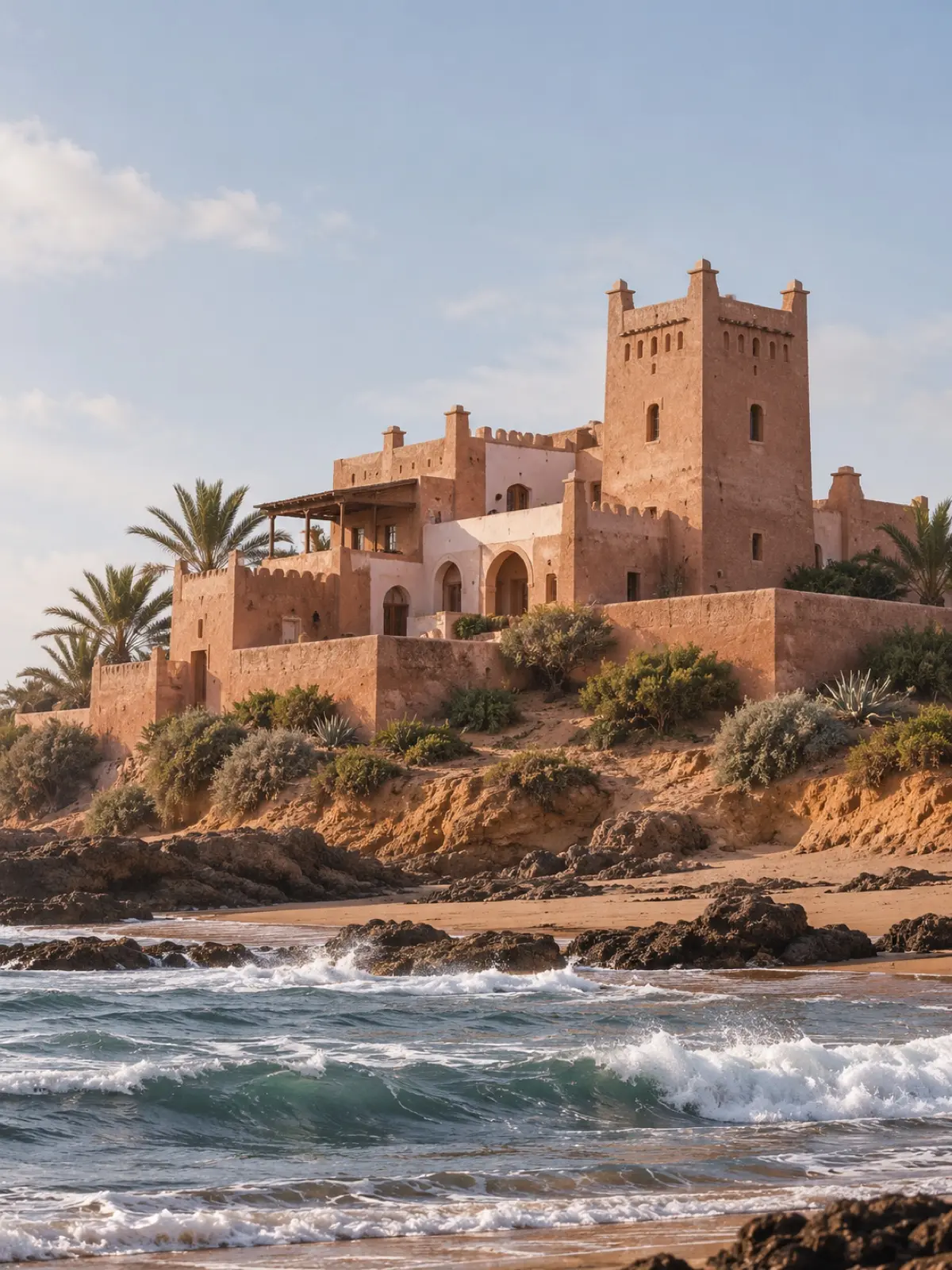
An old farm on the cliff at Harhoura, rebuilt by hand with the earth it stands on. This is how it came back.
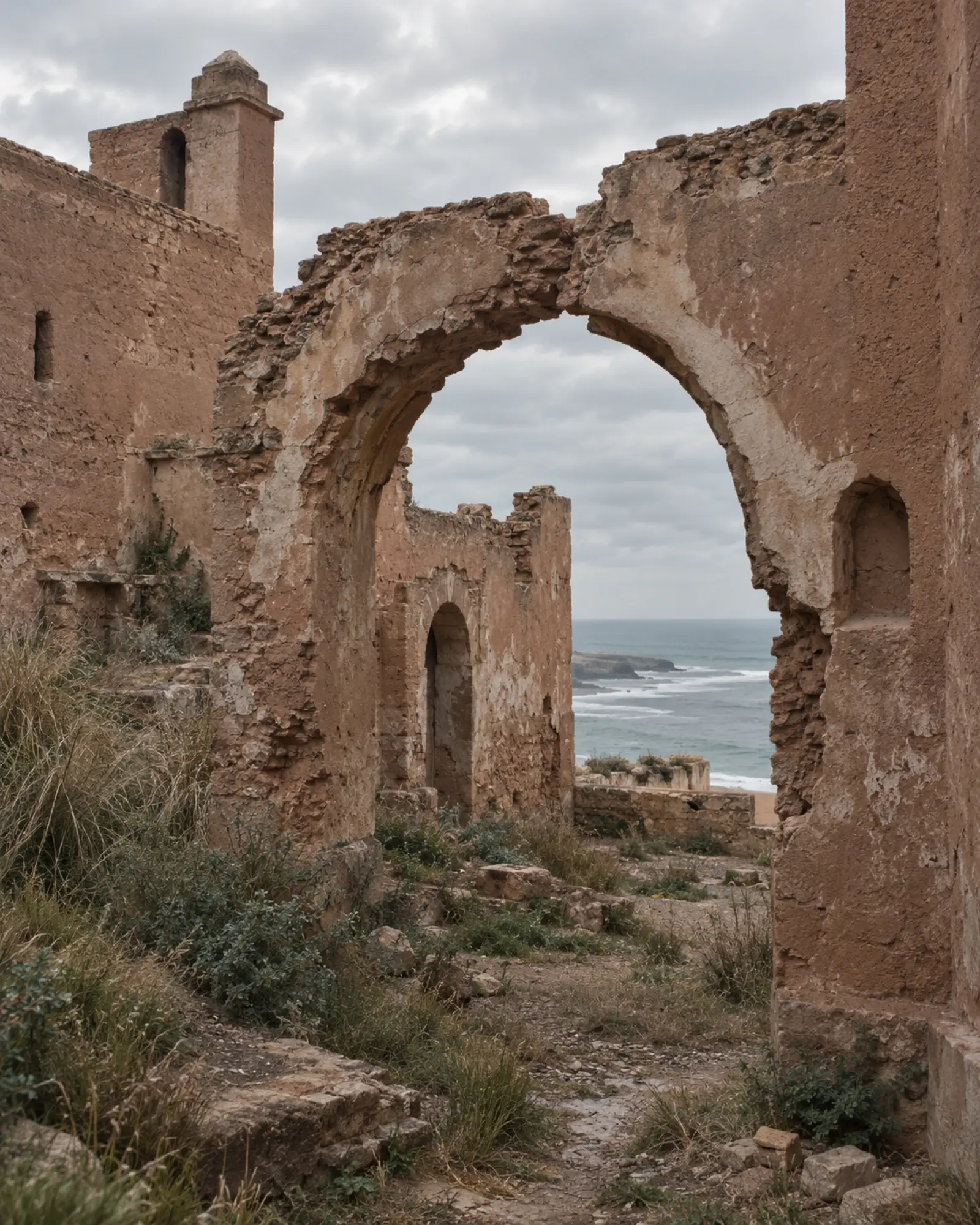
The east wall, before 2019
Built of earth
Every wall you touch here was made from the ground it stands on. We did not build a new hotel in an old style. We repaired an old house in its own way.
1940s
A farm behind a wall
The first walls were raised by a family of farmers who grew oranges and kept goats on the bluff above Harhoura. Earth from the field became the wall around it, the way it had been done in Morocco for a thousand years.
1990s
Left to the wind
When the family moved to Rabat, the kasbah stood empty. Rain softened the parapets, an arch fell, and wild fennel grew in the courtyards. The walls held.
2019
Rammed again, by hand
We bought the ruin and rebuilt it with the same earth and the same method: no concrete, no cement render. Twelve builders from the Drâa valley worked for three years, layer by layer.
2023
The gate opens
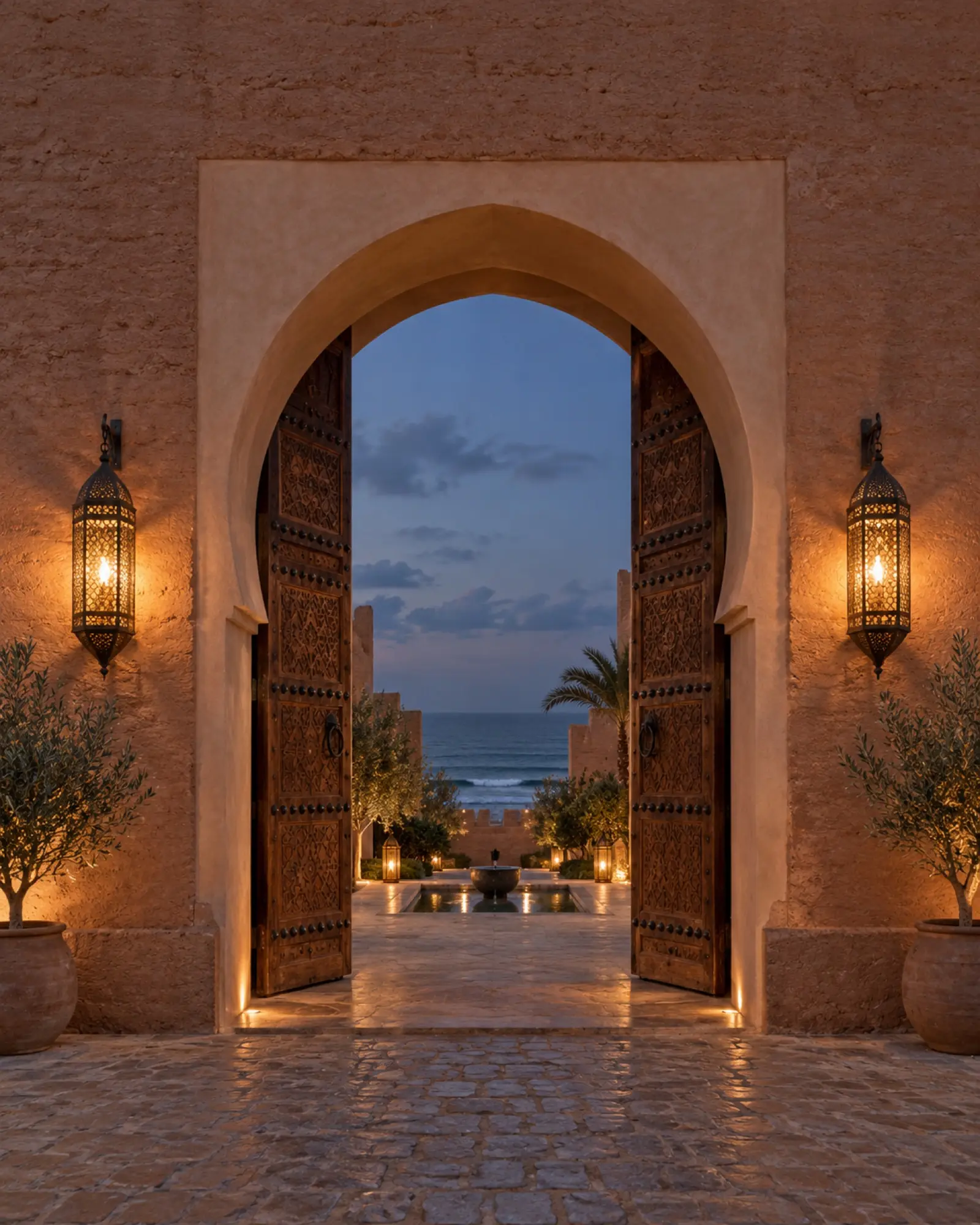
Twenty-two rooms around three courtyards, a hammam under a dome and a kitchen that buys its fish on the beach. The arch that fell is back, and it opens to the sea.
How pisé is made
Earth, ram, cure
Rammed earth breathes. It takes in the humidity of the Atlantic at night and gives it back in the day, which is why the rooms stay cool without much help.
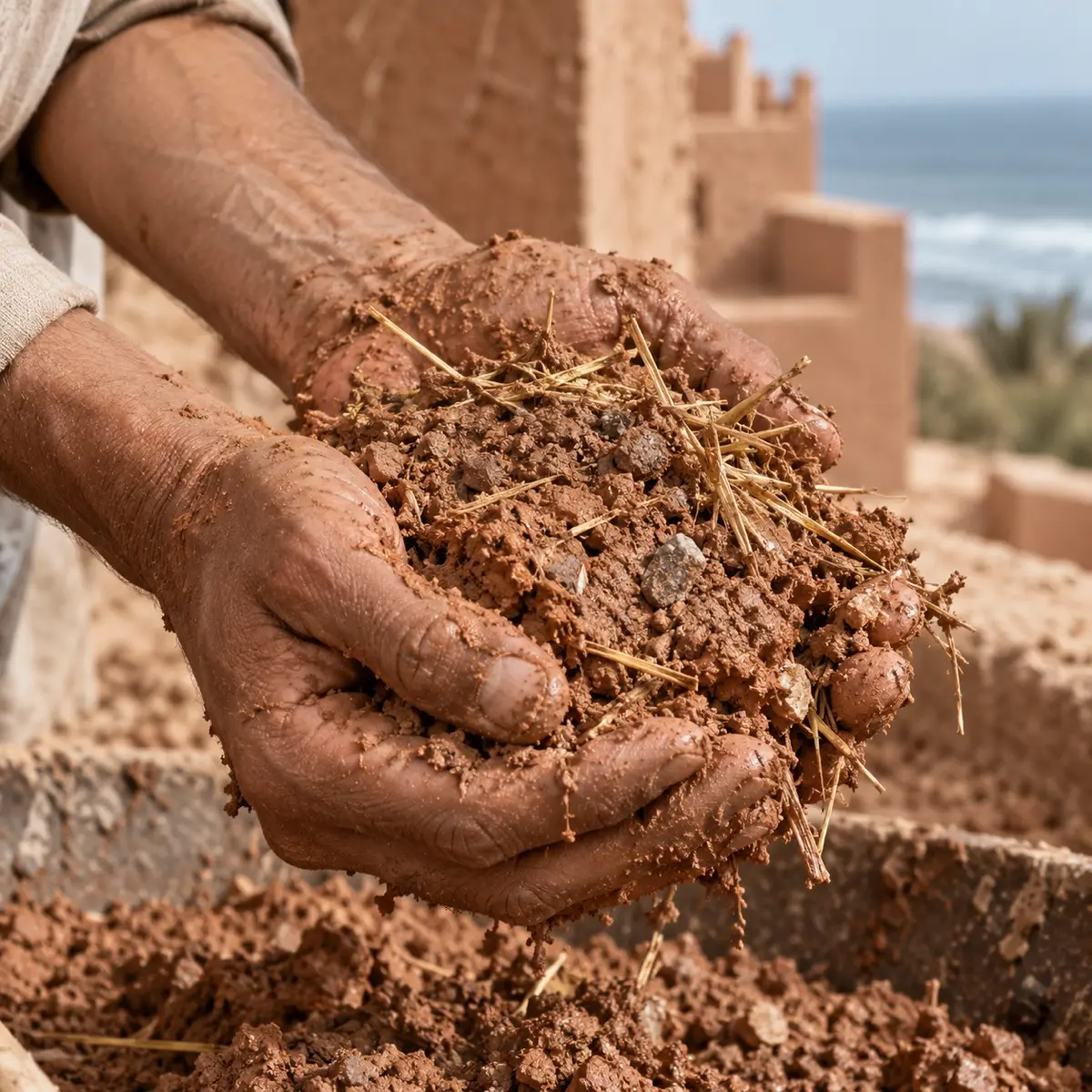
IEarth
Clay-rich earth from the site, sieved and mixed with a little straw and gravel. Nothing is fired, nothing is shipped in.
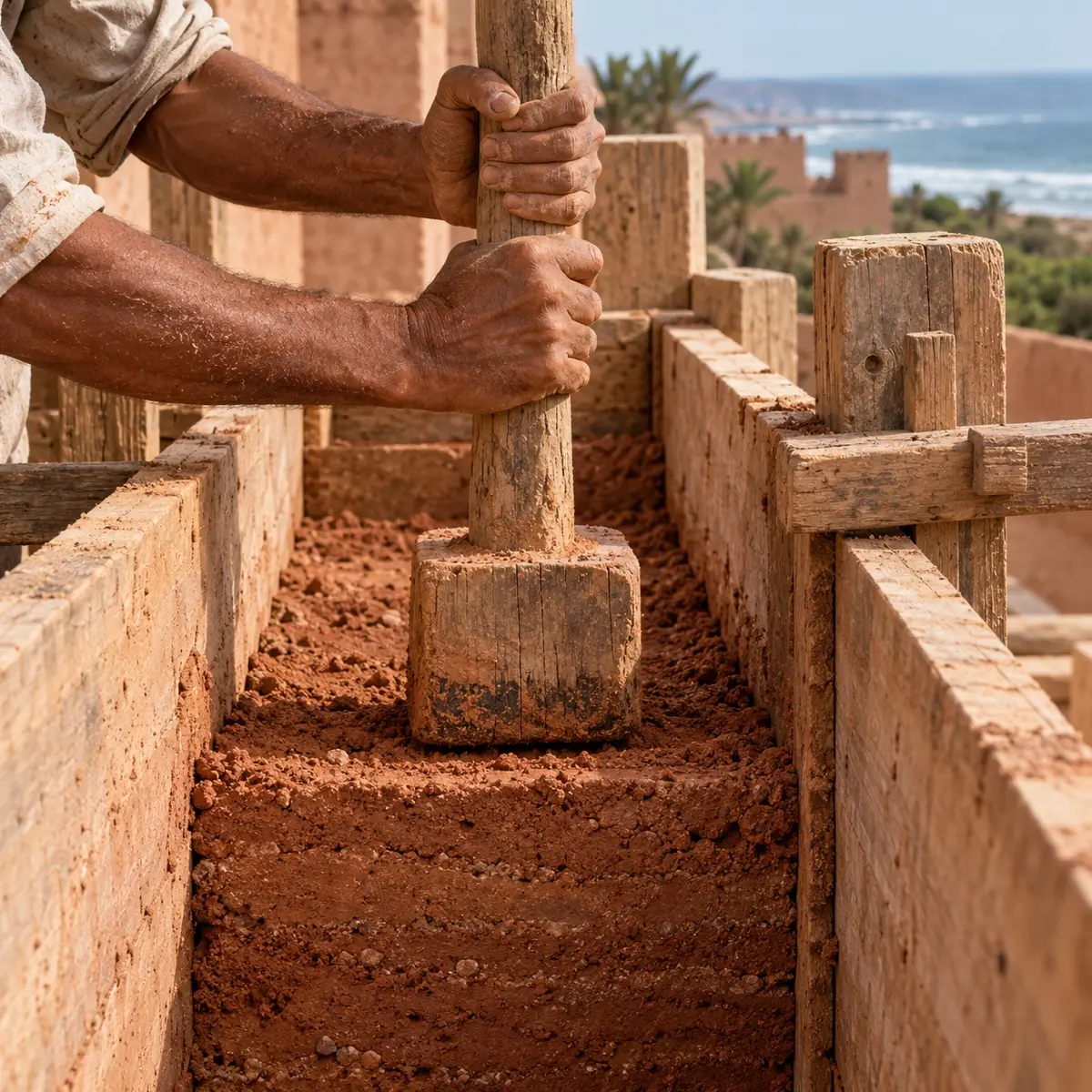
IIRam
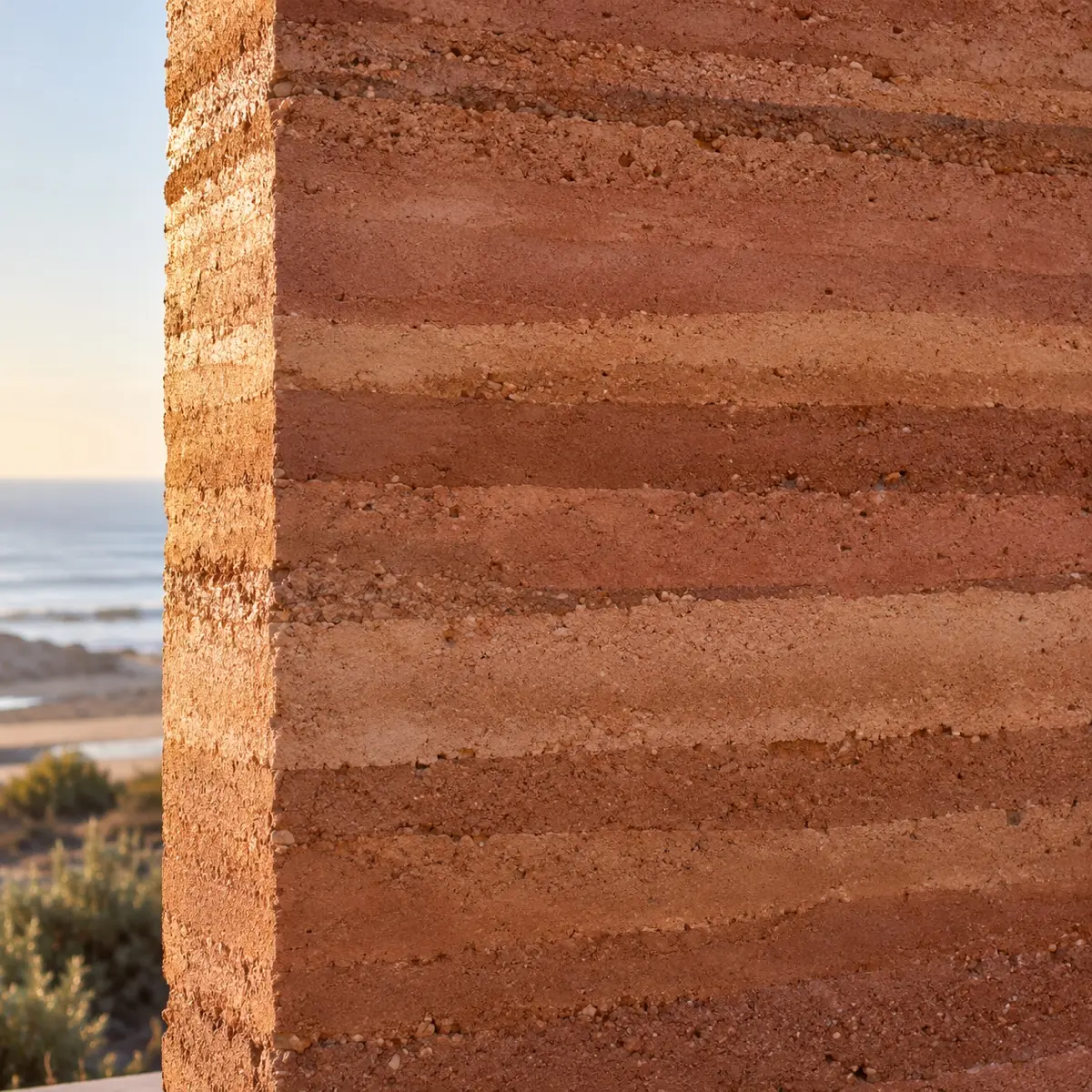
Poured into a cedar frame in layers of ten centimetres, each one beaten with a wooden rammer until it rings.
IIICure
The frame comes off and the wall dries in the sun for weeks. The lines you see on every wall are those layers.
Your hosts
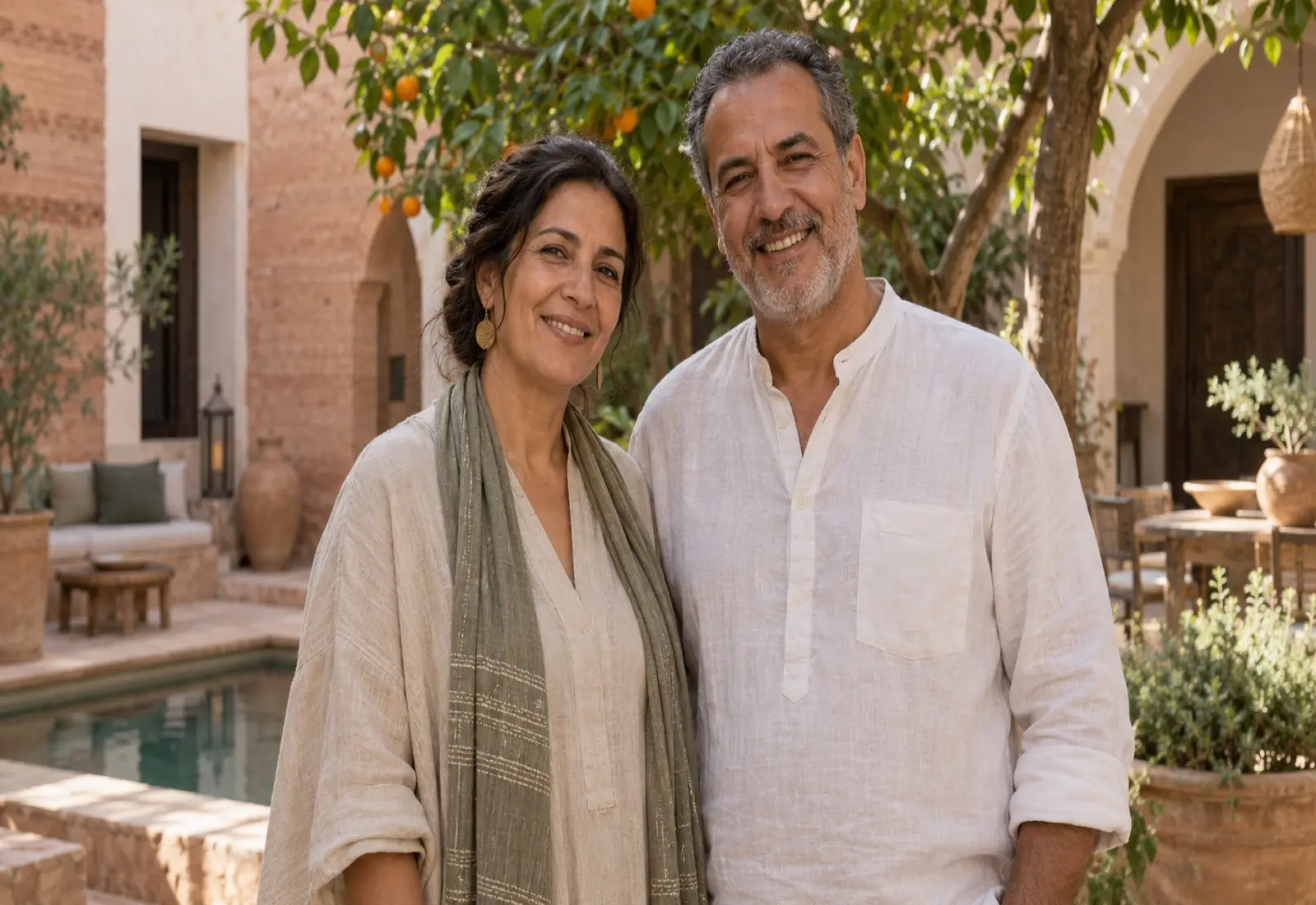
Nadia & Karim
She trained as an architect in Rabat, he ran kitchens in Casablanca. They found the ruin on a walk along the cliff and spent four years bringing it back.
They still live in the house. Most evenings one of them is in the courtyard at dinner, and both know which room catches the last of the sun.
The gate is open
Book direct for our best rate, a late check-out when the house allows, and tea on arrival.